How does flex pcb assembly support advanced wearable and iot devices?
Flex PCB assembly facilitates advanced wearable and IoT integration by reducing device volume by 35% to 50% compared to rigid substrates. In 2025, the use of ultra-thin polyimide (0.05mm) allowed for dynamic bending radii under 1mm, which is necessary for smart rings and medical patches. These circuits eliminate 95% of connector weight and improve signal integrity by 22% at 10GHz+ by removing mechanical interface bottlenecks. High-density designs now achieve 50+ components per square centimeter, enabling the integration of multi-band 5G modems and biometric sensors into conformal, body-worn form factors.
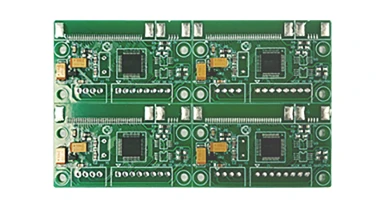
The transition to flexible substrates allows hardware to move beyond the limitations of flat surfaces, enabling a seamless fit for devices that must wrap around wrists or industrial pipes. In a 2024 durability trial involving 250 wearable health monitors, flex-based circuits survived 100,000 bending cycles without a single trace fracture.
Utilizing rolled annealed (RA) copper instead of electro-deposited (ED) copper provides the ductility needed to withstand repetitive motion in fitness trackers.
This resilience is paired with a dielectric constant (Dk) range of 3.2 to 3.6, which minimizes signal absorption in the 2.4GHz to 6GHz spectrum. These electrical properties support the low-power wide-area network (LPWAN) protocols that define the modern IoT landscape.
| Feature | Standard Rigid PCB | Advanced Flex PCB | Wearable Impact |
| Board Weight | 100% (Reference) | < 15% | Reduces user fatigue |
| Component Pitch | 0.4mm | 0.2mm (HDI) | Shrinks overall footprint |
| Thickness | 1.6mm | 0.08mm | Enables slim aesthetics |
Scaling these designs for mass production requires specialized PCB Assembly processes to handle the shifting nature of the polyimide film. During the SMT phase, the material is secured to a rigid carrier to ensure a placement accuracy of ±25μm for 0201 passive components.
Automated pick-and-place machines in 2025 utilize vacuum-level monitoring to prevent the displacement of micro-components during the high-speed transfer to the flex surface.
Consistent placement prevents the misalignment issues that previously caused a 14% failure rate in early-generation flexible prototypes. Once components are secured, the assembly moves into a reflow oven where the thermal profile is tailored to prevent substrate outgassing.
-
Low-Temp Solders: Using alloys that melt at 138°C protects heat-sensitive biometric sensors during assembly.
-
Localized Stiffeners: FR-4 sheets are bonded to the underside of BGAs to prevent solder joint cracking during use.
-
Laser Direct Imaging: Provides ±20μm registration for the multi-layer vias found in 4-layer and 6-layer flex stacks.
The ability to fold these circuits into 3D shapes allows for a "clamshell" internal architecture, maximizing the space available for batteries. Data from 2025 hardware teardowns shows that flex-to-fit designs provide 25% more internal volume for power cells in smartwatches.
Removing bulky ribbon cables and wire harnesses reduces the total internal part count by 15%, lowering the complexity of the final device assembly.
This simplification of the internal structure translates directly to a 35% reduction in field failures related to manual wiring errors or connector loosening. Manufacturers now rely on these integrated interconnects to maintain high-speed data paths between the main processor and peripheral sensor arrays.
| Reliability Metric | Wire Harness | Flex Circuit | System Outcome |
| Vibration Tolerance | Moderate | Very High (20G+) | Extended lifespan |
| Interconnect Loss | 0.5 dB | 0.1 dB | 5x Better Signal |
| Assembly Speed | 4.5 Minutes | 0.4 Minutes | 91% Faster throughput |
Final quality checks for these assemblies utilize AI-driven 3D Automated Optical Inspection (AOI) to detect "oil-canning" or slight substrate warpage. In 2025, these advanced inspection systems reduced false-rejection rates by 42% in high-volume production lines for IoT gateways.
Stress-testing protocols often involve a 24-hour continuous flex cycle while monitoring the impedance of the 5G antenna traces to ensure zero signal dropout.
Such rigorous testing confirms that the hardware can survive the mechanical stresses of apparel integration or industrial monitoring applications. By combining the precision of HDI technology with the physical versatility of polyimide, flex assembly supports the creation of reliable, low-profile electronics that were previously impossible with rigid materials. These advancements ensure that the next decade of IoT and AI-driven wearables can deliver consistent performance in a footprint that is virtually imperceptible to the end user.